 zain
zain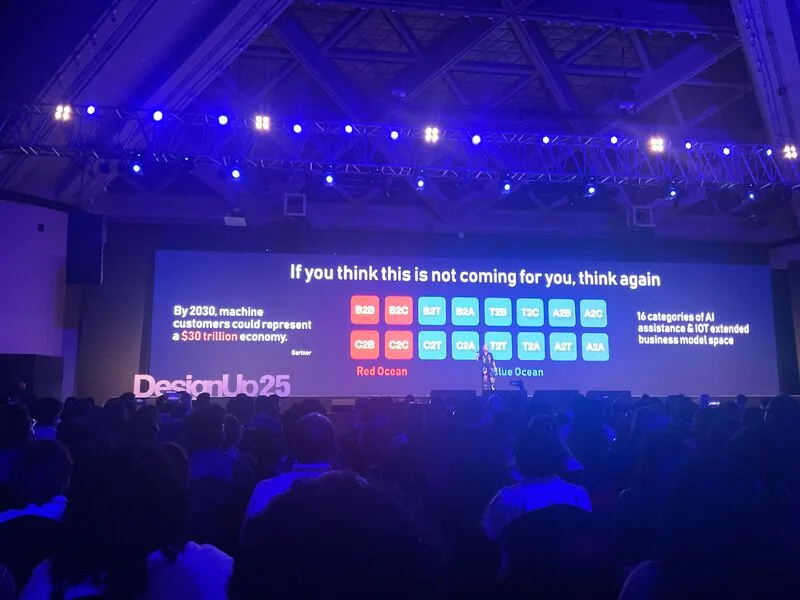
Draft: Zain's voice pass pending. Adapted from a LinkedIn post; he reviews before this publishes.
DesignUp, Episode 4. What does user experience look like when the "user" isn't a human, but an AI agent deciding on their behalf?
People buy beliefs, not products. In the 1920s, Edward Bernays paid women to light cigarettes at the Easter Parade, and the press called it "Torches of Freedom," and smoking stopped being about nicotine and started being about liberation. It worked because humans are emotional; we don't compute, we believe.
Katja Forbes's question flips that entire playbook: what if your next customer isn't human at all? AI agents are already shopping: Visa launched Intelligent Commerce, Walmart automated 70% of vendor negotiations with AI, and 75% of vendors now say they'd rather negotiate with a machine. Machines don't care about brand stories. They read your specs and choose whatever mathematically maximizes their utility. Machine customers want precision, not persuasion.
Machine customer experience: four pillars
- Signal clarity. How legible is your product to algorithms? Can a machine actually parse what you're offering?
- Trust & reputation. Machines don't trust vibes. Can they verify you programmatically?
- Intent translation. Can your product be understood without human storytelling?
- Engagement architecture. Does your API handle machine-speed commerce?
The maturity roadmap
Most companies are stuck at L1 (make the business machine-readable, APIs ready). Levels 2–4 are the real battleground: L2 differentiation (trust mechanisms, agent-specific experiences), L3 ecosystem (integrate with agent platforms/marketplaces), L4 optimization (systems that learn from machine interactions).
Katja's book, Mission Customers: The Evolution Has Begun, is next on my list. And a genuine open question I've been sitting with since: AI browsers are everywhere now: Dia, ChatGPT Atlas, Comet. Are these the early signal of an agentic future, or are we already in it?