 zain
zain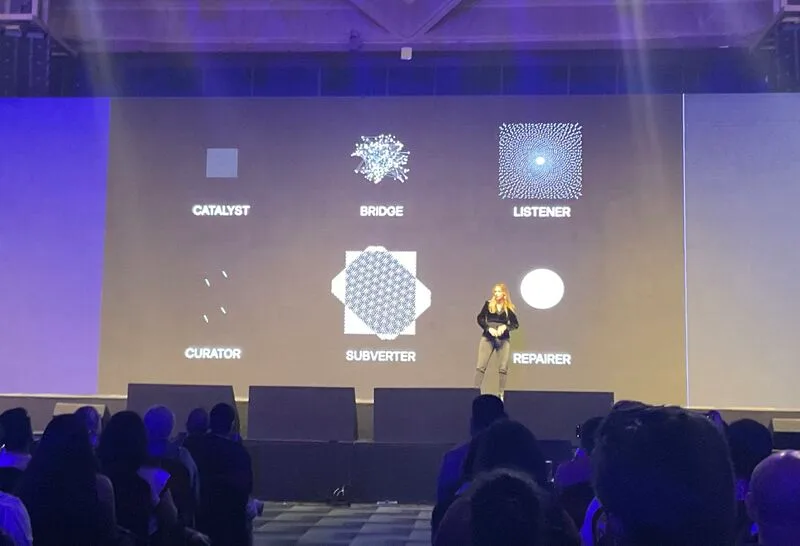
Draft: Zain's voice pass pending. Adapted from a LinkedIn post; he reviews before this publishes.
DesignUp, Episode 7. Lauren Celenza opened with an uncomfortable truth: speed, scale, and efficiency built the AI boom, and they're also driving its biggest harms. An internet flooded with AI slop. Products drifting toward sameness. Misinformation at scale. Under-acknowledged environmental cost. A widening trust gap.
Her point: these aren't AI problems, they're value problems. For a decade, tech scaled faster than it understood, optimized before it questioned, shipped before it considered consequences. AI generates output; humans generate meaning. If the old system rewarded speed, the new one has to reward intention.
Six stances, not skills
Lauren framed the shift through six roles designers can choose to embody, not a checklist to complete, just the one your team needs right now:
- Catalyst. Spark purpose. Turn vague AI ideas into clarity; use prototypes to ask better questions, not rush to solutions.
- Bridge. Create shared understanding. Make complex AI capability usable and coherent for real users.
- Listener. Uncover lived context beyond the dashboard.
- Curator. Protect quality and agency. Decide where AI helps and where it quietly harms clarity or creativity.
- Subverter. Challenge unhealthy defaults. Design for wellbeing, not addiction.
- Repairer. Restore trust through transparency, guardrails, and accountability when things go wrong.
Tying the series together
This was the closing session of a run I'd been following all week. Maria Rosala (Episode 1) taught that AI gives us the stars (the data) but only humans draw the constellations that give them meaning. Khushboo Agrawal (Episode 5) showed how true inclusion depends on seeing the invisible layers (caste, systems, literacy) that decide who benefits from our designs. Lauren's talk was the foundation underneath both: AI reflects the values of its makers, not the sophistication of its models. It creates the output. We still choose the direction.