 zain
zain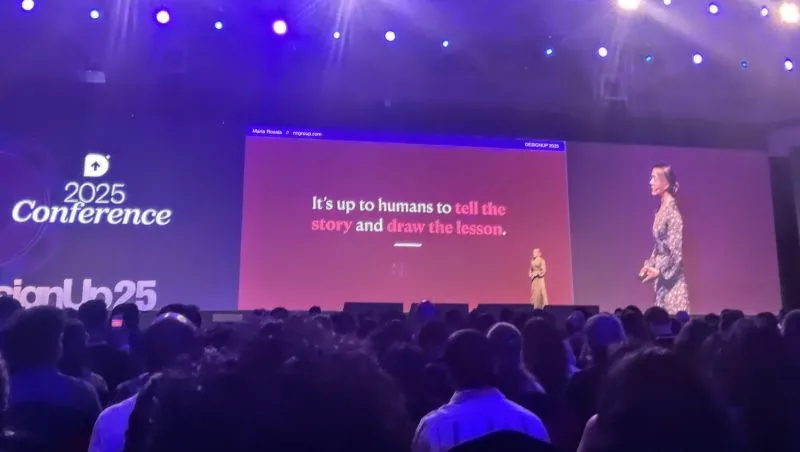
Draft: Zain's voice pass pending. Adapted from a LinkedIn post; he reviews before this publishes.
DesignUp, Episode 1, the first of a series I ended up writing about all week. Maria Rosala opened with a Panchatantra story retold for 1,500 years: an elephant unknowingly crushes a colony of mice while crossing their land, promises never to return, and later, trapped in a hunter's net, is freed by the same mice he'd once threatened.
She said it endures for two reasons, and they're the same reasons human research stays irreplaceable in the age of AI:
1. The lessons it carries. Never judge by size. Keep promises. Leaders should listen. Even small allies matter. And there's always another lesson hidden in the same story, exactly like research, where meaning depends on how you listen and interpret, not just what was said.
2. The power of a simple story. As Mary Catherine Bateson put it, "the human species thinks in metaphors and learns through stories." Maria's framing stuck with me: data are the stars: raw, scattered, without context. Findings are the constellations: the patterns we connect between those stars. But the real work starts when humans tell stories using those constellations: why the pattern exists, what it means, how it shapes the world. That's the insight, and it's a different thing from the data.
Why this landed for me specifically
I spend a lot of time exploring AI tools, and it's genuinely exciting, and occasionally overwhelming. This talk answered a question I keep circling: where do humans fit in all this?
AI can find patterns faster than any of us. It can't tell the stories that give those patterns meaning, because insight needs imagination, context, and values. Design isn't about the artifact (the screen, the flow), it's about the decision behind it: the thoughtful, value-driven choice that creates positive change. AI can produce the artifact. It can't produce the judgment, empathy, or intent behind it. That's the part worth protecting.